
01
Move with more understanding
Balance, coordination, movement control and foundations for strength—taught at an appropriate starting level.
Live online coaching · Ages 8–18
Personal attention for growing bodies. Help your child learn movement skills, enjoy practising and build habits—with you involved.
Pay for a parent consultation₹1,199 / US$15 · 30 minutes · Video or voice
Secure Razorpay checkout · charged in INR.
For the listed USD option, contact Maddy.
Choose email, WhatsApp or both at checkout. Maddy uses those details to contact you.
Already paid? Your next steps
TermsService deliveryCancellation & refunds
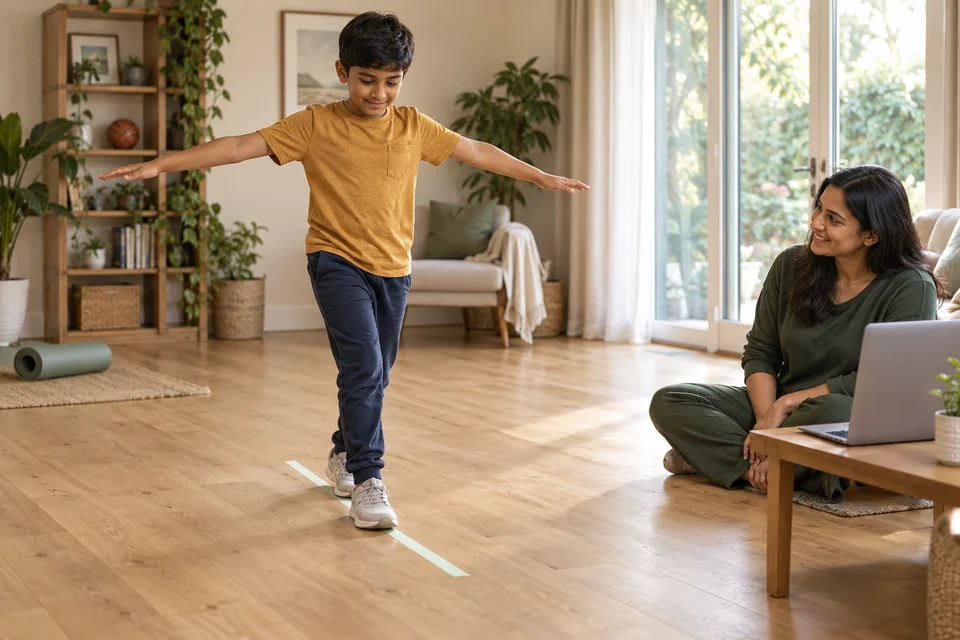
Skills first. A child’s pace.
Start with the child in front of us: their interests, their current skills, and how they feel about movement. Then choose a way forward together.
Balance, coordination, movement control and foundations for strength—taught at an appropriate starting level.
Choose a small, meaningful focus. Practise, reflect and recognise effort without comparing bodies or children.
Space to ask questions, say what feels difficult and learn from feedback. Confidence is supported through the process.
Movement, rest and positive family food habits that make sense around school, interests and everyday life.
The approach, adapted
Playful tasks, clear demonstrations and room to try again. The focus is learning how to move, follow a simple cue and enjoy taking part.
“What felt easier when you tried it again?”
Recognise effort, curiosity and a skill learned—not a comparison with another child.
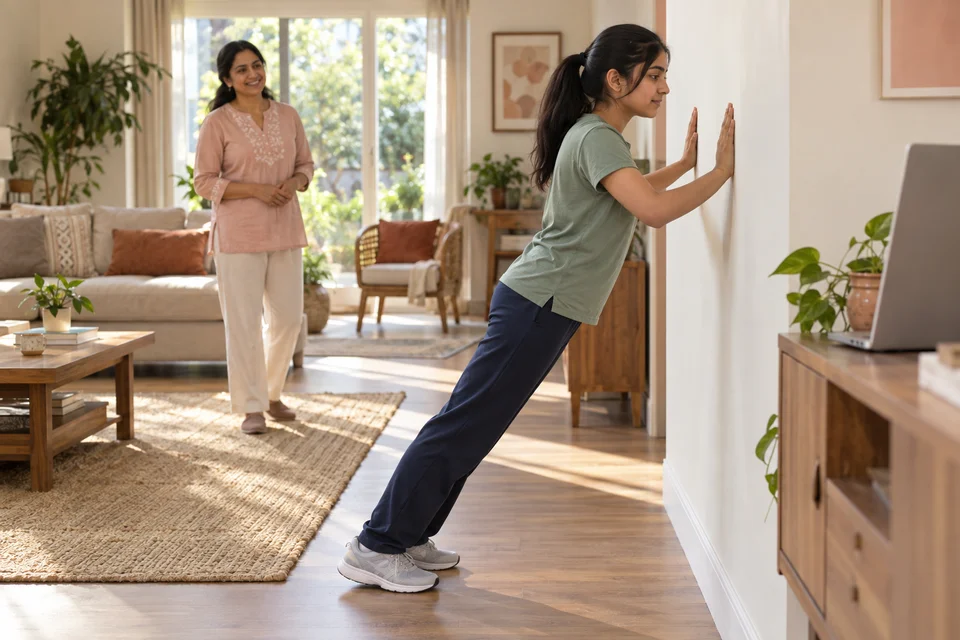
The approach, adapted
Explain the purpose, find a suitable starting level and practise with feedback. Readiness and movement skill guide the next step, alongside the child’s interests.
“Can you show me the part you have learned?”
Changing bodies deserve patient coaching, without pressure about weight or appearance.
The approach, adapted
Build practical training knowledge alongside technique. Work towards chosen goals while learning to recognise effort, recovery and what fits a real school or college week.
“How could this fit into your week?”
More involvement in decisions, with a parent or guardian still part of this family coaching route.
These are examples of emphasis, not fixed programmes. Age is one part of the picture; your child’s ability, readiness and interests guide the actual coaching.
A coach on the other side of the screen
Live coaching makes room for a conversation. Maddy can observe the movement, hear the child’s response and adjust the task as the session unfolds.
How are they feeling today? Confirm the space, camera view and a suitable starting point.
Maddy demonstrates the movement and explains one clear focus in words the child understands.
Watch, give feedback and adjust the task. Room to ask questions, pause and try again.
Name something learned, hear the child’s feedback and share a useful next step with the parent.
A teaching sequence, not a fixed timetable. The length, pace and activities are agreed around the child.
The aim is to help a child understand their body and enjoy making movement part of life.The coaching philosophy
From a live session with Maddy
A short excerpt showing the live coaching format. Activities are selected for the child in the session, not prescribed for every viewer.
Progress worth noticing
Parents and children should understand what is being learned. We can discuss progress through movement, participation and the child’s own experience.
Read our free children’s movement guideWhat can they practise with better understanding or control?
Can they explain a cue, or tell the coach what they need?
What fits their week, and what makes them want to return?
These are conversation points—not a score, diagnosis or promised result.
Two clear steps
A parent consultation comes first. Decide on live classes after you have discussed your child’s needs and asked your questions.
Talk through your child’s starting point, interests, school routine and what you hope coaching can help them learn.
₹1,199/ 30-minute consultation
US$15 / 30-minute consultation
Online checkout charges ₹1,199 in INR. Your bank’s conversion and fees may differ. For the listed US$15 option, contact Maddy before paying.
Secure Razorpay checkout · charged in INR.
For the listed USD option, contact Maddy.
Choose email, WhatsApp or both at checkout. Maddy uses those details to contact you.
Already paid? Your next steps
TermsService deliveryCancellation & refunds
The call time is confirmed with Maddy. Questions about suitability or availability? Ask before paying.
Maddy explains the package fee during your parent consultation, alongside suitability and your family’s schedule.
Complete the parent consultation and agree suitability, session length, availability, fee and package terms with Maddy before paying for classes. He then shares the agreed payment details. The consultation is separately priced.
12 sessions, valid for six weeks from the first scheduled session. Give at least one hour’s notice to request a reschedule. Review the cancellation and refund policy before paying.
Discuss kids coaching Read the parent questionsFrom payment to your first step
Choose email, WhatsApp or both at checkout for your coaching coordination. For children, the contact is always a parent or guardian.
Complete your details and payment on Razorpay. Choose email, WhatsApp or both, using contact details you can access.
Keep your Razorpay receipt. Maddy checks the received payment in Razorpay and uses the details you provided there. No second contact form is needed.
Maddy contacts you through your chosen channel to arrange your assessment or session. Call times are agreed with you, not automatically booked at checkout.
Maddy contacts the parent or guardian to arrange the 30-minute consultation. Discuss your child’s needs, suitability and availability before deciding on classes. Your written Start Sheet follows within 24 hours after the call.
Your part in the process
A supportive adult and a suitable setup matter in online coaching. We discuss these together before the first class.
A stable camera, enough light and a clear view of the movement. Check the floor and remove nearby obstacles. Discuss equipment before buying it.
A parent or guardian makes the enquiry, joins the consultation and remains available during sessions. Agree the supervision arrangement in advance.
Parent-led contact, no private child messaging and separate permission for any public use of recordings. Stop and tell the coach if something hurts or feels wrong.
Healthy food learning happens with the family. Clinical, injury or growth concerns are referred to appropriate qualified care.
Knowledge, with context
Play, walking, sport and everyday movement matter alongside coached sessions. General activity guidelines are population references; they do not prescribe a child’s first workout or establish what this programme will achieve.
Varied, enjoyable and age-appropriate activity. Its daily target includes activity across the day, not only a coached class; the youth age range does not include 18-year-olds.
Appropriate instruction, supervision and technique-led progression. This does not establish that all online settings are equally suitable.
A good-practice reference for clear adult-led communication, privacy and boundaries.
Before your first conversation
Begin with understanding
Their interests. Their starting point. The questions on your mind.
₹1,199 / US$15 · 30 minutes · Parent or guardian joins
Secure Razorpay checkout · charged in INR.
For the listed USD option, contact Maddy.
Choose email, WhatsApp or both at checkout. Maddy uses those details to contact you.
Already paid? Your next steps
TermsService deliveryCancellation & refunds